Fail or “Not Ready”: read the result first
Fail. CARB's test-results guidance says a failed OBD test means the vehicle needs repairs and a retest. Two common reasons: a fault code that is currently commanding the check-engine light (MIL) on, and a stored permanent fault code (PDTC). CARB's OBD testing background explains that a permanent code fails the test even when the light is off, unless the vehicle meets CARB's criteria for operation since the code was cleared.
Not Ready. This is not the same as a fail. It usually means the truck's monitors have not run since codes were cleared or the battery was disconnected. CARB says not to schedule an OBD test if codes were recently cleared, and to drive the truck normally and retest once it is ready.
Opacity and visual inspection. Diesel trucks without OBD (generally 2012 and older engines) take a smoke-opacity test plus a visual inspection of the emissions-control equipment. If either part fails, the same rule applies: repair, then retest. See which test your truck needs.
Step 1: find the cause, don't just clear the code
Clearing codes to turn off the light does not fix a failed test. It can leave the truck “Not Ready”, and a permanent code is designed to stay until the system confirms the repair. CARB also notes that repair work itself can clear codes, so plan for drive time between the repair and the retest.
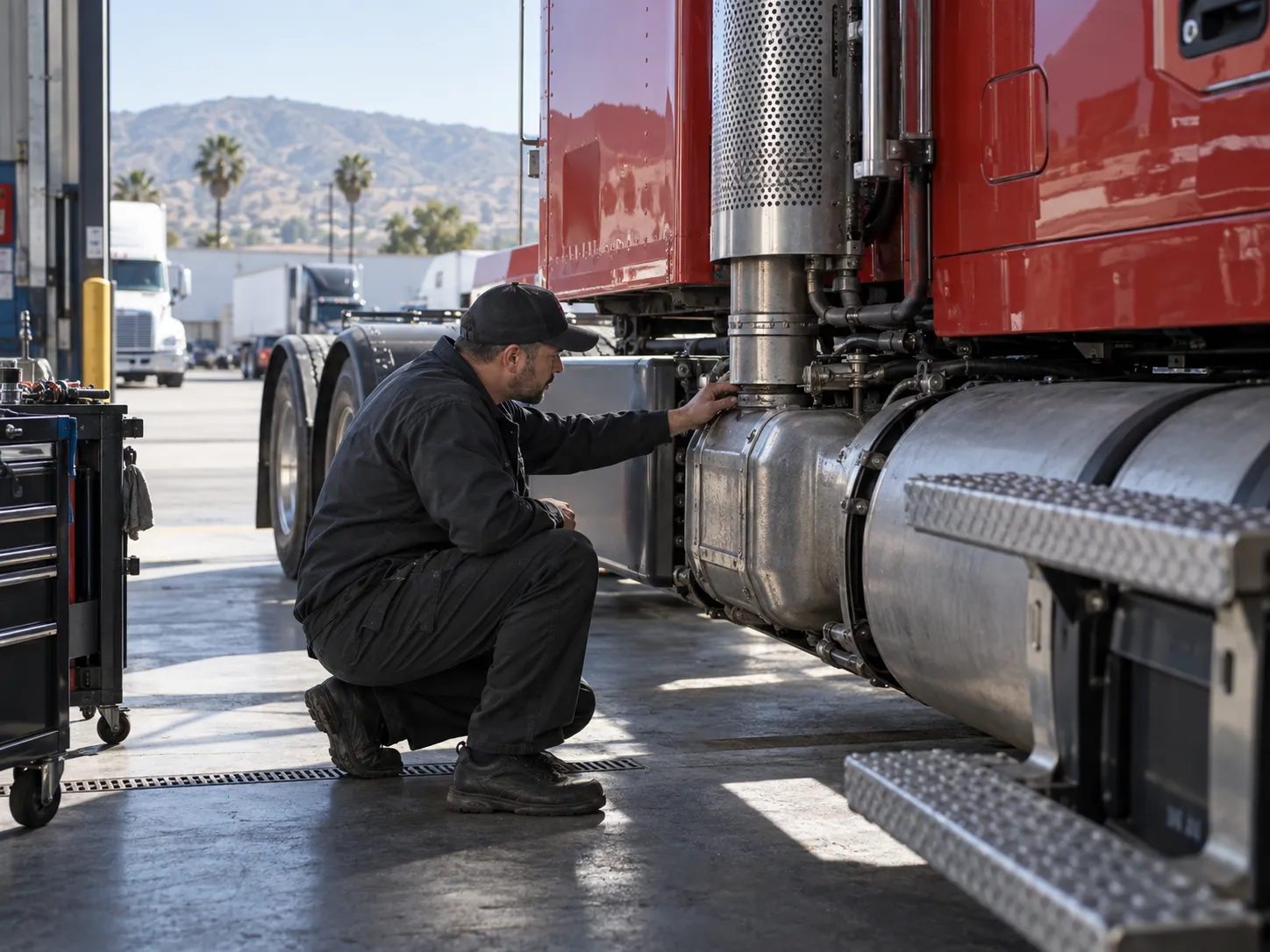
Start with diagnostics. We connect to the truck's computer, record the active and permanent codes, and look at what the aftertreatment system is reporting: DPF soot load and differential pressure, regeneration history, NOx sensor and DEF dosing data. That tells us whether the problem is a restricted DPF, an SCR or DEF fault, a sensor, or an engine issue upstream. Our diagnostics guide covers what to have ready.
Step 2: repair what the data points to
The fix depends on the cause. Common aftertreatment causes include:
- A loaded or restricted DPF that regeneration no longer clears. If the filter is intact, cleaning may be the next step; see SPN 3719 and SPN 3251.
- Low SCR efficiency or DEF problems, such as poor DEF quality, dosing faults or NOx sensor faults; see SPN 4364 and SPN 5246.
- Sensor or wiring faults that set the code without a failed component behind them.
- Engine-side problems, such as injectors or oil consumption, that keep loading the aftertreatment system.
Step 3: drive it, then retest
After the repair, operate the truck normally so its monitors can run. CARB recommends testing early in the compliance window: a passing test can be submitted up to 90 days before the deadline, which leaves time for another repair if the first one does not clear the problem. CARB does not list a limit on retests; follow the instructions that come with each result.
When the truck is ready, we can run the retest. We are CARB-credentialed for OBD and opacity testing, and as the credentialed tester we send the result to CARB. Check that the result appears in your CTC-VIS account.
What happens if the deadline passes
CARB places a DMV registration hold automatically on vehicles that are not compliant with Clean Truck Check. To clear it, the vehicle must be reported in CTC-VIS, the annual compliance fee paid, and a passing test on file. CARB says the hold is removed 1–3 business days after that; you then contact DMV to finish registration.
If a repair is stuck because parts are not available, CARB has a parts-unavailability compliance time extension, requested through the CARBTest Referee. It has conditions, including proof that you contacted at least one repair facility, no tampering, and no open emissions recalls. If you believe a test result was wrong, the Referee can also review it; CARB notes the Referee does not make or recommend repairs.
Fleets: keep one fail from stalling the schedule
For a fleet, the risk is several units hitting the same deadline with no time for repairs. Test early in each window, send us the codes from any unit that fails, and we can plan diagnostics, DPF cleaning and retests around your routes at your yard. See fleet DPF cleaning, or request a test.
Frequently asked questions
How many times can I retest after a failed Clean Truck Check?
CARB's guidance does not list a retest limit. After a fail or “Not Ready” result, follow the instructions that come with the result, repair as needed and retest before your compliance deadline.
Can I clear the codes and retest right away?
No. Clearing codes can leave the truck “Not Ready”, and CARB advises against scheduling an OBD test right after codes were cleared. A permanent code also stays until the system confirms the repair. Fix the cause, drive the truck normally, then retest.
Who sends the retest result to CARB?
The credentialed tester. CARB says the Clean Truck Check credentialed tester is responsible for sending the results to CARB. Check that the result shows up in your CTC-VIS account.
Will a failed test put a hold on my registration?
A failed test on its own is a signal to repair and retest. CARB places a DMV registration hold on vehicles that are not compliant. To clear it, the vehicle needs to be reported in CTC-VIS, the annual fee paid and a passing test on file.
Can DPF cleaning help my truck pass?
It depends on why the truck failed. If diagnostics show a restricted DPF on an intact filter, cleaning may be part of the repair. We can't promise a pass: a sensor, SCR/DEF or engine fault needs its own repair. We diagnose first and tell you what the data shows.
How quickly can you retest my truck?
Service is available 24/7, and we come to your yard within 120 miles of Upland. The sooner you call, the more of your 90-day window is left for any repair. Call 909-236-1377 with the truck's location and your deadline.
Sources
- CARB: Clean Truck Check test results FAQ ↗
- CARB: Clean Truck Check OBD testing background ↗
- CARB: OBD testing recommended practices ↗
- CARB: Emissions compliance testing requirements ↗
- CARB: Semiannual compliance requirements ↗
- CARB: DMV registration hold (SB 210) fact sheet ↗
- CARB: Parts-unavailability compliance time extension ↗
- CARB: CARBTest Referee FAQ ↗
For Clean Truck Check deadlines and requirements, always check your CTC-VIS account and CARB.