What SPN 3719 means
The engine computer estimates how much soot the DPF is holding and logs SPN 3719 when that estimate crosses a threshold. The FMI (failure mode identifier) that comes with it tells you how serious it is.
OEMs report this differently. Detroit logs soot load under SPN 3719. Cummins engines report soot-load severity under SPN 3251 with FMIs 15, 16 and 0. Always read the code together with its FMI and the engine make.
Common FMIs (Detroit)
From a Detroit service bulletin published through NHTSA:
- FMI 16, soot level high. Resolved with a parked regeneration.
- FMI 0, soot level very high. Also resolved with a parked regeneration. Detroit's procedure says the operator has two minutes to initiate the regeneration request, and not to interrupt the regeneration.
- FMI 31, informational. A silent code that logs when the DPF regeneration lamp is flashing in “Regen Zone 2.”
Symptoms
A solid or flashing DPF/regeneration lamp, a request for a parked regeneration, more frequent regenerations, and in more severe cases the check engine lamp. Cummins' driver guidance, for example, says a flashing DPF lamp together with an illuminated check engine or amber warning lamp means a parked regeneration is required.
Why the filter loaded up
Soot builds up faster than regeneration can burn it off when the truck doesn't get enough hot, steady running: short trips, a lot of idling, or regenerations that keep getting interrupted. EPA also notes that an engine emitting excessive particulate or getting inadequate regeneration will make a DPF need cleaning more often, so a repeat SPN 3719 can point to an engine-side problem upstream of the filter.
Ash matters too. Regeneration turns soot into ash, and ash doesn't burn, so a filter with a lot of ash has less room for soot. See forced regeneration vs. DPF cleaning.
How to fix SPN 3719
Follow the engine maker's procedure first: for Detroit, a parked regeneration that is not interrupted. Cummins' driver guide also allows at least 20 minutes of highway-duty driving as an alternative to a parked regen in some conditions.
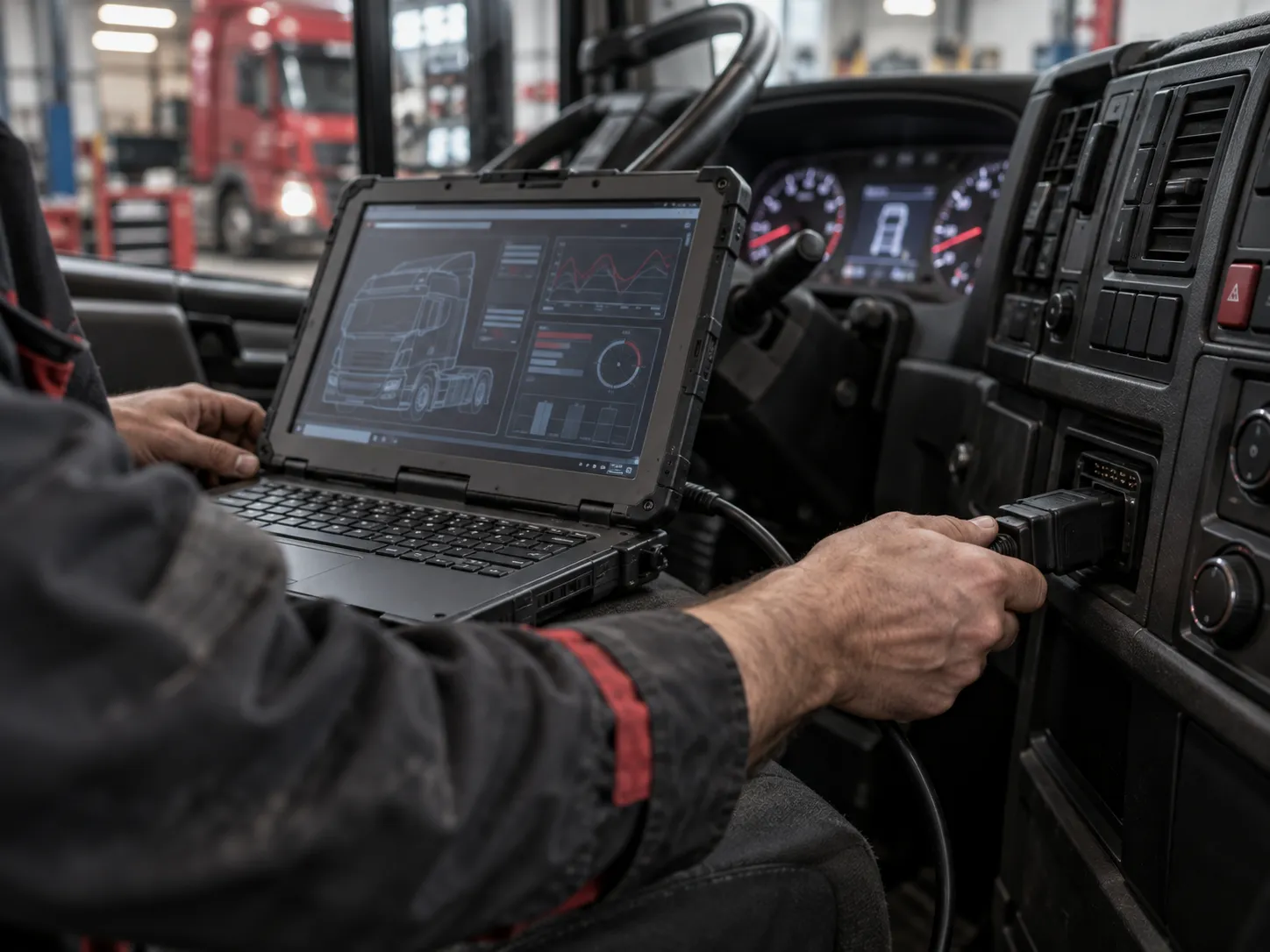
If the code returns soon after a successful regeneration, stop repeating regens and diagnose. We connect to the truck's computer, check regeneration history, differential pressure and related codes, and look for causes such as interrupted regens, sensor faults, injectors or oil consumption. If the filter is intact and the cause is addressed, DPF cleaning may be the next step; our on-truck cleaning normally takes 2–3 hours, depending on filter condition. A cracked or melted filter needs replacement. Costs are compared in our DPF cleaning cost guide.
Clean Truck Check
CARB's OBD test fails a truck with a fault code currently commanding the check engine lamp on, or with a stored permanent code. Don't clear codes just before the test: it can leave the truck “Not Ready.” See what to do after a failed Clean Truck Check. We are CARB-credentialed for OBD and opacity testing.
Get the truck looked at
Send us the code, FMI, engine make and where the truck is parked. We come to your yard within 120 miles of Upland, or you can bring it to our workshop. See mobile DPF cleaning or fleet service, or call 909-236-1377.
Frequently asked questions
What does SPN 3719 mean?
It reports the soot load in the diesel particulate filter. On Detroit engines, FMI 16 means soot level high and FMI 0 means very high. Cummins engines report soot-load severity under SPN 3251 instead.
Can I keep driving with SPN 3719?
Follow the dash prompts and your engine maker's procedure. Detroit's procedure for FMI 16 and FMI 0 is a parked regeneration. Don't keep running a truck that is asking for a parked regen.
Will a parked regen clear SPN 3719?
Often, if the regeneration completes without interruption. If the code returns soon after, something is loading the filter too fast or ash has built up, and the truck needs diagnosis rather than more regens.
Does SPN 3719 mean I need DPF cleaning?
Not automatically. Cleaning makes sense when the filter is intact, ash has built up and the cause of fast soot loading is fixed. We check the data before recommending it.
Can you clear the code so the truck passes Clean Truck Check?
No. Clearing codes doesn't fix the problem and can leave the truck “Not Ready” for the OBD test. We find and fix the cause, then the truck can be tested. We are CARB-credentialed for OBD and opacity testing.